Multi-omics integration for cancer risk prediction
MODULE 1: PREDICTIVE DIAGNOSTICS
Sep 28, 2025
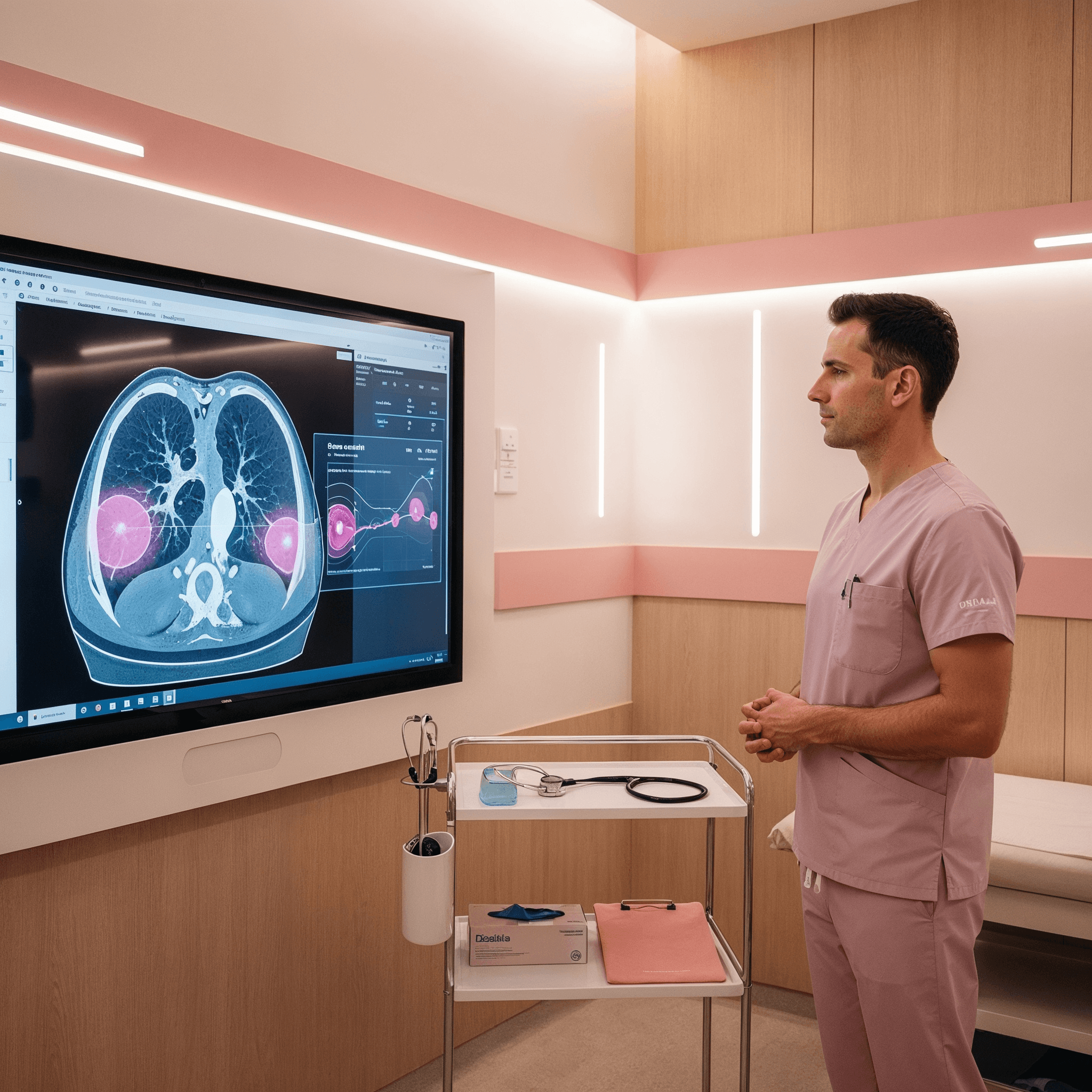
The future of cancer detection isn't about better tests—it's about combining them
Traditional cancer screening relies on single-method approaches: mammography looks for tumors, blood tests check one biomarker, genetic tests examine specific mutations. But cancer isn't a single-pathway disease. It emerges from complex interactions across multiple biological systems simultaneously.
Multi-omics integration changes the game. Instead of viewing your health through one lens, we analyze genomics (your DNA), transcriptomics (gene expression), proteomics (proteins), metabolomics (metabolites), epigenomics (gene regulation), and microbiomics (microbial composition) together—creating a comprehensive biological profile that reveals patterns no single test could detect.
Think of it like weather forecasting: meteorologists don't just measure temperature. They track atmospheric pressure, humidity, wind patterns, ocean currents, and historical data simultaneously. The integration of multiple data sources makes predictions exponentially more accurate. The same principle applies to cancer prediction.
Why single-omics approaches miss the full picture
Genomics alone shows potential risk, not actual disease progression. You might carry BRCA1 mutations that increase breast cancer risk, but most carriers never develop cancer. Genetics tells you what could happen, not what will happen or when.
Proteomics reveals current biological activity. Proteins are the workhorses of cells—they execute genetic instructions. Abnormal protein patterns appear years before tumors form, making proteomic analysis critical for early detection. But proteins alone don't explain why changes are occurring.
Metabolomics shows systemic health status. Your metabolic profile—how your body processes nutrients, creates energy, and eliminates waste—shifts dramatically in precancerous states. Cancer cells have distinct metabolic signatures, detectable through blood or urine analysis. Yet metabolism responds to many factors beyond cancer: diet, stress, inflammation, medications.
The microbiome influences immune response and inflammation. Gut bacteria composition affects everything from hormone metabolism to immune surveillance of cancer cells. Certain microbial signatures correlate with cancer risk, but microbiome changes are highly individual and context-dependent.
Epigenetics reveals gene expression changes without DNA mutations. Cancer often begins with epigenetic modifications—chemical tags that turn genes on or off without changing DNA sequences. These changes are reversible and detectable earlier than genetic mutations, but require integration with other omics layers for interpretation.
Each layer provides valuable information. But analyzed in isolation, each has significant limitations: high false-positive rates, limited predictive power, and inability to distinguish between benign variations and true disease signals.
The power of integration: 1 + 1 + 1 = 10
When we combine multi-omics data, something remarkable happens: the whole becomes greater than the sum of its parts.
Cross-validation reduces false positives. A suspicious proteomic signature gains confidence when supported by epigenetic changes, metabolic shifts, and microbial alterations. Conversely, an isolated abnormality without corroboration across other omics layers may simply reflect normal biological variation.
Temporal patterns emerge. By tracking changes across multiple omics layers over time, we identify trajectories toward disease, not just static snapshots. Someone whose metabolic profile is deteriorating while proteomic and epigenetic markers remain stable follows a different risk trajectory than someone showing coordinated changes across all layers simultaneously.
Mechanistic understanding improves predictions. Integration reveals why risk is increasing, not just that it's increasing. Are hormone-metabolizing gut bacteria declining while estrogen-responsive proteins increase and BRCA1 gene expression decreases? That's a mechanistic chain explaining elevated breast cancer risk—and suggesting specific interventions.
Personalization becomes possible. Population-level risk scores (like polygenic risk scores based on genetics alone) apply poorly to individuals. Multi-omics integration creates personalized risk profiles that account for your unique biology, lifestyle, environment, and disease mechanisms.
How NoCancer AI implements multi-omics integration
Our platform doesn't just collect omics data—it uses advanced AI to find patterns invisible to human analysis or traditional statistics.
Graph Neural Networks (GNNs) model biological relationships. Biological systems are networks: genes regulate proteins, proteins catalyze metabolic reactions, metabolites influence gene expression, microbes produce metabolites that affect hormones. GNNs represent these interactions as networks, identifying disrupted pathways that signal disease.
Transformer models handle temporal dynamics. Healthcare generates time-series data: repeated blood tests, longitudinal imaging, continuous monitoring. Transformers—the AI architecture behind ChatGPT—excel at finding patterns in sequences. We use transformers to track how your multi-omics profile evolves, identifying concerning trajectories early.
Causal inference distinguishes correlation from causation. Not every biomarker change causes cancer; many are bystander effects or consequences of cancer rather than causes. Our causal AI models identify which biological changes are driving disease progression versus merely correlating with it, improving both prediction and intervention targeting.
Explainable AI makes integration transparent. Multi-omics integration risks becoming a "black box" where even clinicians can't understand why predictions are made. Our XAI framework shows which omics layers, specific biomarkers, and biological pathways contribute most to risk scores—maintaining clinical trust and enabling informed decision-making.
Real-world evidence: Multi-omics outperforms single tests
Research validates the multi-omics approach:
Ovarian cancer detection: A 2023 study combining proteomic panels, metabolomics, and CA-125 blood tests detected ovarian cancer 2 years earlier than CA-125 alone, with 89% sensitivity and 95% specificity—compared to 72% and 86% for CA-125 alone.
Breast cancer risk prediction: Integrating genomics (polygenic risk scores), proteomics (250-protein panels), and metabolomics improved 10-year risk prediction accuracy by 34% compared to genetics alone, identifying high-risk individuals who would have been missed by standard screening.
Treatment response prediction: Multi-omics profiling before chemotherapy predicted treatment response with 82% accuracy, enabling personalized therapy selection. Genomics alone achieved only 61% accuracy.
Cancer recurrence forecasting: Combining tumor genomics, circulating tumor DNA, microbiome analysis, and metabolomics predicted cancer recurrence 8 months earlier than imaging surveillance, with 76% positive predictive value.
These results share a common theme: integration consistently outperforms single-method approaches, enabling earlier detection, better risk stratification, and more personalized interventions.
Challenges and solutions in multi-omics implementation
Data integration complexity: Each omics layer uses different measurement technologies, scales, and data formats. Our platform standardizes data through preprocessing pipelines that normalize values, correct batch effects, and align temporal measurements—making heterogeneous data comparable.
Computational demands: Analyzing billions of data points (genomics alone generates gigabytes per person) requires specialized computing infrastructure. We use cloud-based GPU clusters and optimized algorithms that make multi-omics analysis feasible in clinical timescales (hours, not weeks).
Cost considerations: Running 5-8 omics analyses per person isn't yet economically viable for routine screening. Our tiered approach uses affordable tests (metabolomics, microbiome) for broad screening, reserving expensive analyses (whole-genome sequencing, comprehensive proteomics) for high-risk individuals identified in initial screening.
Privacy and data security: Multi-omics data is highly identifying—more so than genomics alone. We implement federated learning approaches where AI models train on data without centralizing it, differential privacy techniques that prevent individual re-identification, and blockchain-based consent management giving patients control over data sharing.
Clinical validation requirements: Regulatory agencies require prospective clinical trials proving multi-omics approaches improve patient outcomes, not just prediction accuracy. NoCancer AI is participating in collaborative trials through Cancer Image Europe and UNCAN.eu networks, building the clinical evidence required for regulatory approval.
What this means for cancer prevention
Multi-omics integration transforms cancer from a disease we detect to one we predict and prevent. By identifying biological trajectories toward cancer 8-10 years before tumors form, we create unprecedented opportunities for intervention:
Lifestyle modifications when metabolic and microbiome signatures indicate elevated risk
Enhanced surveillance for individuals showing coordinated changes across multiple omics layers
Prophylactic interventions when biological changes are irreversible but cancer hasn't yet developed
Personalized screening schedules based on individual risk trajectories rather than population averages
The future of cancer care isn't better treatment—it's preventing cancer from ever developing. Multi-omics integration makes that future possible.
FAQ
Answers to your questions
Get quick, clear information about our services, appointments, support, and more
How does NoCancer AI predict cancer 8-10 years early?
Is the temperature-based screening safe?
How do I join the consortium?
What is the EIC Pathfinder Challenge 2025?
How does your AI comply with EU regulations?
FAQ
Answers to your questions
Get quick, clear information about our services, appointments, support, and more
How does NoCancer AI predict cancer 8-10 years early?
Is the temperature-based screening safe?
How do I join the consortium?
What is the EIC Pathfinder Challenge 2025?
How does your AI comply with EU regulations?
FAQ
Answers to your questions
Get quick, clear information about our services, appointments, support, and more
How does NoCancer AI predict cancer 8-10 years early?
Is the temperature-based screening safe?
How do I join the consortium?
What is the EIC Pathfinder Challenge 2025?
How does your AI comply with EU regulations?
Your prevention journey begins with one conversation
Your prevention journey begins with one conversation

Your prevention journey begins with one conversation
Your prevention journey begins with one conversation
Your prevention journey begins with one conversation
Your prevention journey begins with one conversation